Table Of Content

Comprised of architectural, engineering, and construction professionals, as well as academics, students, and project Owners, its members collaborate and innovate to deliver some of America’s most successful projects. Project schedule overruns are a considerable risk that can have ripple effects on costs and, therefore, requires careful consideration. Design-Build features parallel project schedules that enable a shortened project duration. Characteristics should be carefully reviewed before choosing a delivery method for your project.
What types of contract can be used for the design build procurement route?
As a team, no other group is better qualified to align the owner’s vision with the project’s goals and objectives. Time and again, Design-Build reliably equates to headaches eliminated, teams collaborating and owners pleased. The single-source responsibility afforded by Design-Build means there’s no conflicting recommendations from contractor and architect. Instead, one entity has total accountability for any and all construction and design elements. Owners know where the buck stops, and the way is paved for a smooth owner experience. These less prescriptive projects need not be stuck with the "broken buildings and busted budgets"[18] described by Barry Lepatner.
Train Your Team
Because design-build brings architecture and design and construction under a single contractor, the owner has a single point of contact throughout the project's life cycle. The design-build project delivery method offers many advantages to owners in various building scenarios, but like all building projects, design-build carries some risk. Because of the breadth of a design-build contract, one of the most significant decisions the owner needs to make is selecting a design-build team. The design-build method opens the door for significant collaboration between the various stakeholders on a construction project.
Jacob Javits Convention Center Honored as One of the Best Design-Build Projects in the United States Insights - Turner Construction Company
Jacob Javits Convention Center Honored as One of the Best Design-Build Projects in the United States Insights.
Posted: Fri, 08 Sep 2023 07:00:00 GMT [source]
Design-build saves time and money by encouraging innovation and collaboration
As with any project delivery method, a comprehensive, fair, and unambiguous contract is critical to maintaining relationships and completing a successful project. Because the relationship between owners and design-build teams is so collaborative, owners may lean on past experiences during the selection process to hire teams they're familiar with. The success of a design-build project may hinge on the level of trust and collaboration within the design-build team. Throughout construction, the general contractor owns the building process, and completes a change order for any part of the plan that won't work or needs alteration. The contractor submits the required changes along with a quote for the additional costs that will result, and the owner signs off on the changes. A Design and Build contract reduces disputes between the contractor and designer by making the contractor responsible for design and construction.
What Does a Design-Build Team Look Like?
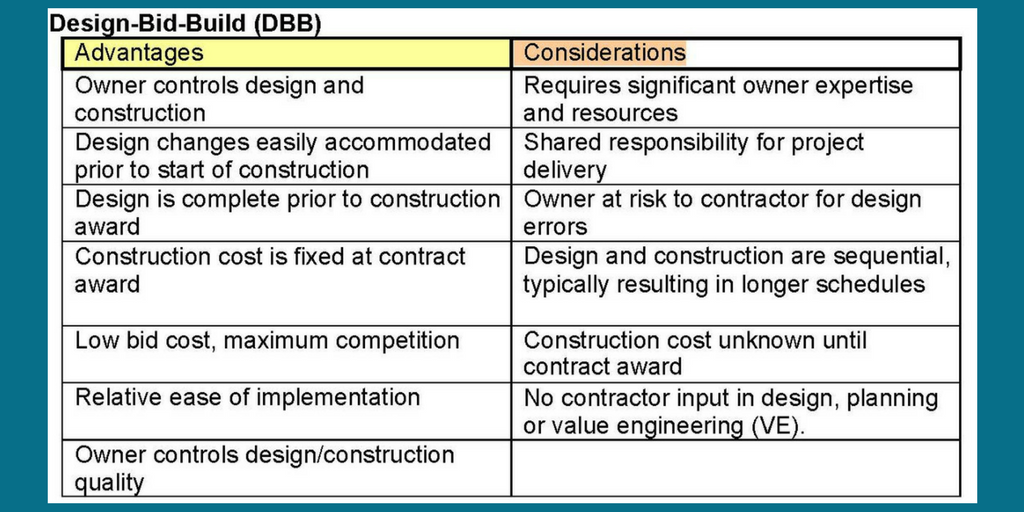
The bridge was originally constructed to have one westbound and two eastbound lanes. The project team widened the bridge to allow for five lanes, plus room for a median and shoulders on either side. One of the primary issues with a design-bid-build project is the lack of collaboration between contractors and designers. Since an owner doesn't hire a contractor until after the design is complete, the contractor doesn't get to weigh in until after the contractor has signed on to the job. The owner of a design-bid-build project benefits from a one-thing-at-a-time approach, focusing first on the design of the future build, then on finding the right builder for the job, then bringing the physical project to life.
Future trends in design-build construction
They announced substantial quarterly losses from fixed-price Design-Build projects forcing them to change their business strategies. The most prominent difference between design-build and design-bid-build processes is the level of interaction between contractors and designers. Contractors on design-build are involved in the process from the outset and can consult or suggest changes to project designs very early in the process. If you’re an owner or firm new to the delivery method, it will take time to master and excel in a new process.
Designing Buildings Anywhere
Although the use of subcontractors to complete more specialized work is common, the design-build contractor remains the primary contact and primary force behind the work. It is now commonly used in many countries and forms of contracts are widely available. The relationship between client, designer and builder has traditionally been particularly fraught, with the three parties usually spending a lot of their time grumbling and rolling their eyes at each other. For architects, getting yelled at by a client or scoffed at by a contractor is pretty much a rite of passage. It’s not surprising that architects, ever the perfectionists, have tried to design a better way of doing business by rethinking project delivery methods. If you’re unsure what “project delivery method” means, check out an earlier article on Integrated Project Delivery here.
“The design-build gets much more of a collaborative conversation going earlier. And we found that that yields trust, and trust goes a long way in the construction of a facility,” shares Zeswitz. With Progressive design-build (PDB), the design-builder team is the major player in terms of design. It is preferable to be as specific as possible when negotiating a Design-Build contract. Warranties and insurance can help general contractors deal with challenges, but gaps and ambiguity in contracts can make them difficult to use. DBB is best suited to shorter-term, straightforward projects that aren't likely to require many design changes.

First, the owner contracts the architecture and design process to one firm, then enters a second contract with a general contractor to complete construction on the project. When project teams sign on to separate contracts, they get to focus on their realm of expertise. Designers don't have contractors in their ears when they design, and contractors can focus on building without worrying about overseeing designs. Each team is responsible for and can be held accountable according to their very specific roles. Our 6,000+ members may have joined DBIA for access to the nation’s best design-build education and professional certification that inspires both projects and futures. But most of them renew their dues each year because they’ve witnessed the power of collaborating with like-minded people.
An integrated and comprehensive approach requires owner engagement and commitment throughout the selection, award, design, and construction process to benefit a value-based, choice-based delivery method. Because there is only one contract, the design-builder sees the project through from the initial design concept to construction completion, carrying single-source responsibility. The design-builder is fully responsible and accountable for delivering all aspects of the project, including identifying any problems or issues, pinpointing the underlying causes, and correcting them. They are also responsible for managing all contracts with other companies, including subcontractors, materials providers, and equipment vendors, relieving that responsibility from the Owner. Ultimately, choosing a delivery method depends on a wide variety of factors, and no contracting method will work on every project.
The early collaboration between stakeholders in the design-build method means that the construction process typically proceeds smoothly—and the agreed-upon GMP means there are no budget surprises for the owner. Design-build has become quite a popular alternative to the traditional design-bid-build construction delivery model for many project owners. But the model isn't suitable in every situation, and not all stakeholders agree it's the best way to get things done. Whereas the design-build method gives a DB team full responsibility for project delivery, the design-bid-build method contracts out specific processes, leaving the bulk of responsibility for changes and challenges to the owner. Owners who choose the design-build delivery method enter into a contract with a single firm, which takes on both the architecture and engineering (design) process and the construction of the final product.
They’ll analyze the project’s site and any existing structures or utilities located on the site, and they’ll look for potential challenges so they can prepare and plan accordingly. Regardless, these teams will band together contractually to form your design-build team. The success of the entire project will be their goal, as opposed to the success of just their area of expertise. This motivates them to work together from the start, looking at the big-picture success of the project.
Still, the design-build method offers many selling points for construction owners. Owners will pull in the expertise of a design-build team to form early visual representations of the project through building information modeling (BIM) and virtual design and construction (VDC). Early collaboration could give design-build teams a leg up because this early collaboration offers better insights into project design, scope, budget, and timeline. Through the site selection process, the owner starts to form a picture of the project's scope, budget, and schedule to determine its viability further.
One of the significant benefits of design-build is streamlined communication – the owner has a single point of contact in the design-build team. Design-build can compress the schedule by a significant margin for very large and time-extensive projects. Some large infrastructure projects projected to take over two decades using the design-bid-build method were completed within just five years using design-build.
The human error component has largely been taken out of the equation.” So, why can’t every organization use their existing e-bidding platform to evaluate design-build contracts? The point of the article is that they can - if their software is evolving alongside industry demands. Design-bid-build has been the dominant project delivery approach in the construction industry for a long time. The lump sum upfront estimation, with clear delineation between design and construction, have been the primary ways the construction industry has done business. Now it's the most popular and fastest growing project delivery method — and will deliver nearly half of America’s construction projects. This method establishes early collaboration in the project’s planning and design phases which leads to fewer problems down the road.
It’s a blend of strategy, problem solving and vision — form and function coming together to create facilities that meet business needs and improve operations. Design-Build Done Right® encourages greater competition and focuses that competition to deliver superior projects. Kristen Frisa is a freelance writer specializing in finance and construction technology. She has helped numerous companies to provide value to their readers and establish their expertise in their industries. Kristen holds a degree in philosophy and history and a post-graduate certificate in journalism. The company had been waiting for the outcome of an ongoing SMR design competition in the UK – first announced by the Government in 2015 – before it made a decision on the pressure vessel plant.


No comments:
Post a Comment