Table of Content
- What is the laughing buddha holding?
- We shall read about Laughing Buddha here. Who is he?
- Laughing Buddha Statue with Money Bag
- Laughing Buddha bearing a Wu Lou and a Fan
- Laughing Buddha statue: Correct placement at home
- Places To Avoid Placing The Laughing Buddha Statue For Home
- In which direction should we place the Laughing Buddha for obtaining good luck?
In Hinduism, Lord Kuber is known to be the Lord of Fortune and wealth. But, in China, the Statues of Laughing Buddha are kept to improve their good luck and grab the positive energies around their places. They strongly trust the idol to shield them and doubles the chances of positive vibes in houses. And, many of us may have a question that what direction should be laughing buddha face in a home?
Keeping the image in the drawing room facing the East will strengthen the bond between family members. Placed in the South-East direction, laughing Buddha is believed to increase the good fortune. Chinese temples have figures of the Laughing Buddha located at temple entrances. He is often worshipped as a God of good luck and prosperity. Keep Laughing Buddha in front of your front door at all times.
What is the laughing buddha holding?
It is believed that if a person rubs his belly it brings good luck. The laughing Buddha can be placed at the entrance of the house facing east, north-east, or south-east. In high negative energy environments, the laughing Buddha can be placed facing the front door. Place the Buddha opposite the main entrance facing the inside of the house. It can be oriented in the east, north-east, or south-east direction. The laughing Buddha can be placed in the east, south-east or north-east direction of the home, or opposite to the main entrance, facing the inside of the house.

As laughing Buddha statue for home is considered a protector of children, place a small statue in children’s room, facing the door for protection and good luck. Both hands of laughing Buddha with palms upward, the right hand is on the top of the left head signifies meditation, the balance of thought and tranquil mind. The hand raised and palm facing outward fingers pointing upward is the symbol of reassurance and positivity.
We shall read about Laughing Buddha here. Who is he?
The reassuring and serene presence of Buddha statues at home helps in decor, as well as in attracting positive energies. Place Buddha with candles in the south and northeast areas of your home, as per Feng Shui. The upward pointed trunk of the elephant denotes contentment, wisdom, and success.
She is the feminine counterpart of the bodhisattva (“buddha-to-be”) Avalokiteshvara. According to popular belief, she came into existence from a tear of Avalokiteshvara, which fell to the ground and formed a lake. Out of its waters rose up a lotus, which, on opening, revealed the goddess.
Laughing Buddha Statue with Money Bag
It is very normal for people to buy Laughing Buddha in India. But, in China, there are some rules and regulations to buy the statue, i.e. one should not buy the statue selfishly for the purpose of wealth. If the statue is kept only on the greed of wealth, it will affect negatively. The image of the Laughing Buddha is based upon a Chinese Zen monk called Hotei or Pu-Tai who lived more than 1, 000 years back.
He has been nicknamed as Laughing Buddha because he always carried a big smile in his face. You will find him wearing a robe, and he has beads around his neck. As he is always happy and has an ever smiling face, that is why He is rightly called ‘The Laughing Buddha.’ The internet is flooded with laughing Buddha statutes. A Laughing Buddha painted red can bring in the fire element.
Laughing Buddha bearing a Wu Lou and a Fan
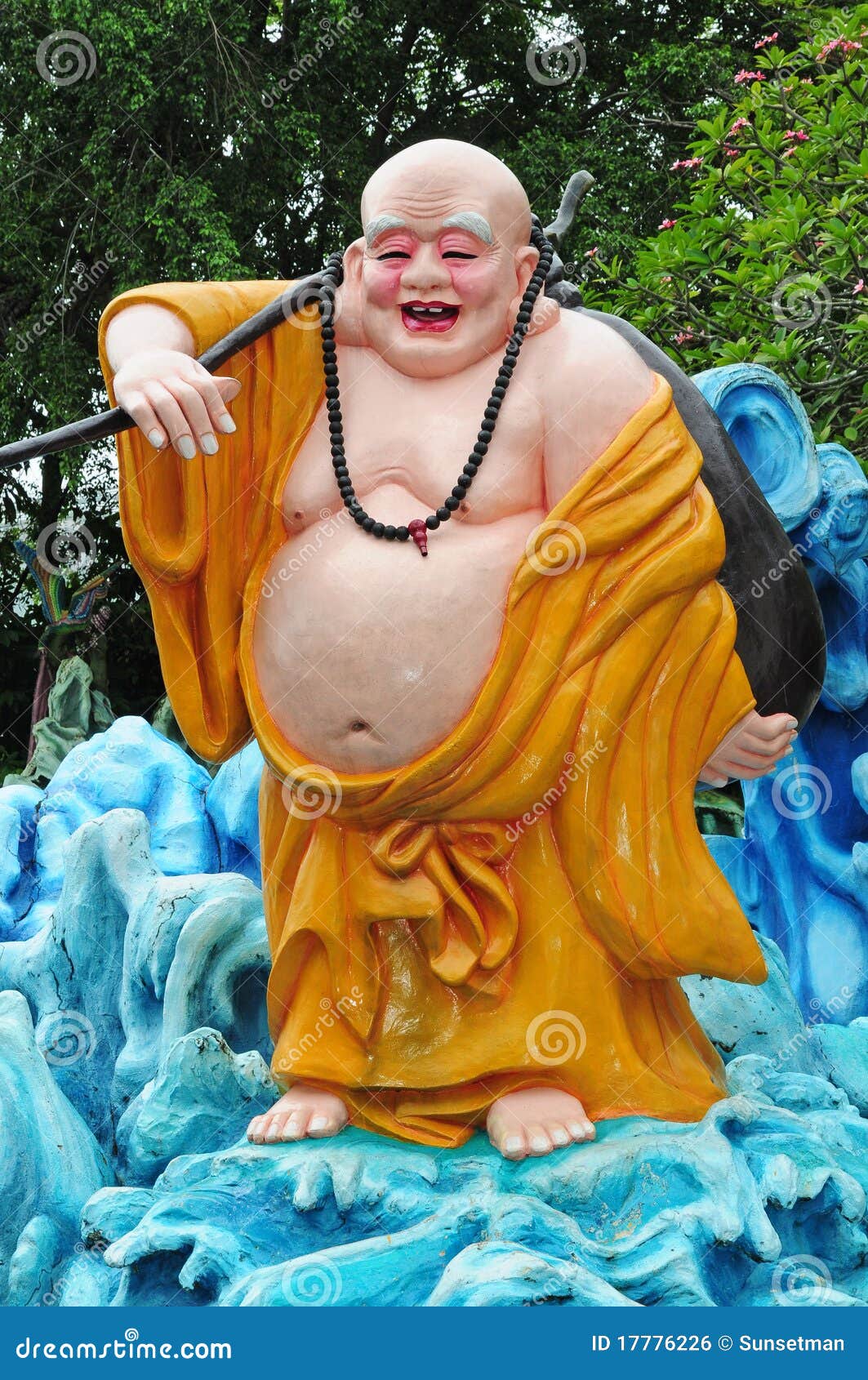
Laughing Buddha statues are considered auspicious and are often kept in homes, offices, hotels and restaurants, for positive energy and good luck. The laughing buddha statue is often known to attract lots of abundance and prosperity into a house. It is considered very good luck to rub the belly of the laughing buddha statue as it attracts health and wealth and good luck of course. The money bag on the happy man’s shoulder has many interpretations. In one version, the buddha statue is known to tell us that it carries the troubles and worries of people and takes it away in his sack.
Having Buddha on your office desk increases your pay and removes your adversaries. 1) The seated Buddha is considered the seat of love and symbolizes the balance between thoughts and tranquillity. 2) It should be placed at a height atleast equal to eye level. 6) Keeping Buddha on one's desk enhances luck and fulfils aspirations. Do not place the statue where someone’s feet will be pointing towards it. Keeping Buddha on your office desk enhances your salary and removes enemies.
The statue shows a large bag filled with money and riches flung over his back while wielding a Wu Lou , symbolising healing, health, and longevity. In Feng Shui, the traveling monk is used in areas that need a little boost in luck. The laughing Buddha is symbolic of Budai- the bodhisattva Maitreya . People for a long time have believed that rubbing the belly of the statue will bring them good luck, health, wealth, and prosperity. If the statue is placed in the south-east direction, it will lead to an increase in the wealth of the family.
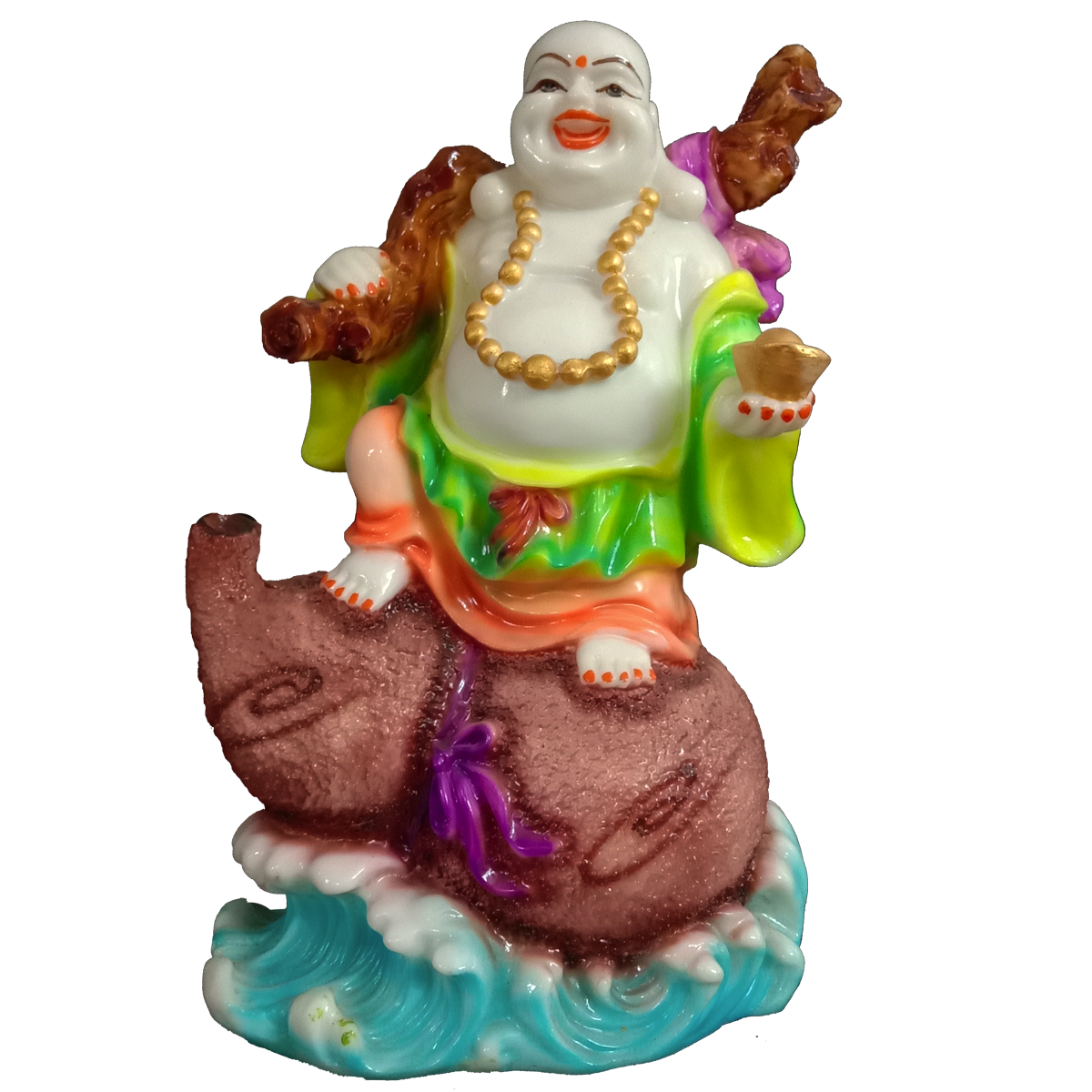
This statue of a laughing Buddha on an elephant symbolizes good luck and fortune. An upward-pointed elephant trunk denotes happiness, prosperity, success, and wisdom. Today, various laughing buddha statues are available, and you can choose to have them all in various parts of the house. The laughing Buddha holding the bag or holding the fan is symbolic of a saviour who is believed to take away people’s troubles and bring health. Having a laughing buddha statue in the house can give seniors a strong sense of positivity and well-being every day. The positive feeling that the Buddha evokes will make their day happier and take away their fears.
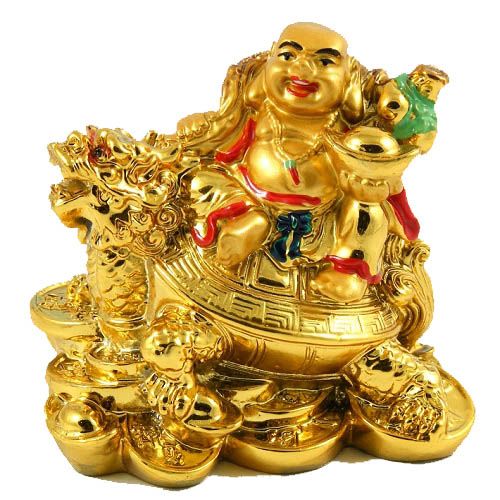
The dragon represents strength and the turtle signifies stability. Placing Him in the Southeast direction of the dining room, bedroom, and main hall will increase the income of the family. If you place the Buddha facing Sheng Chi direction, it is assumed it brings riches and helps in self-development. Laughing Buddha holding a gold block with his hands depicts abundant wealth and good fortune. The sitting posture symbolizes a life that a quiet life with nothing much to worry about.
Laughing Buddha statues are available in different materials including metal, porcelain, and wood. In the end, I would like to conclude by saying that all statues of the Laughing Buddha are seen as being symbols of joy, abundance, and wellbeing. You must absolutely include the Laughing Buddha idol that you feel will benefit you and your family the most. By doing this, you'll attract luck and pleasant vibes into your environment. If the statue is placed in the southeast direction, it will lead to an increase in the wealth of the family. This statue symbolizes a long, happy, healthy, and relaxed life.
It also signifies victory in financial matters or personal obstacles. The Buddha holds the right hand positioned at shoulder level with the tips of the thumb and index finger touching and forming a circle. The palm of the right hand faces inwards and the left hand has its palm facing up to receive, and may be positioned near the lap.
When placing a Buddha statue for home, in Vastu, make sure the area is clean and clutter-free. The sitting posture of Buddha is considered to be that of love and it symbolises the stability of thoughts and tranquillity. Placing the statue near electrical outlets, motors, or above any electronic appliance can cause interference in an aura of good energy. Without a doubt, the Laughing Buddha is one of the most popular Feng Shui figures in the world.